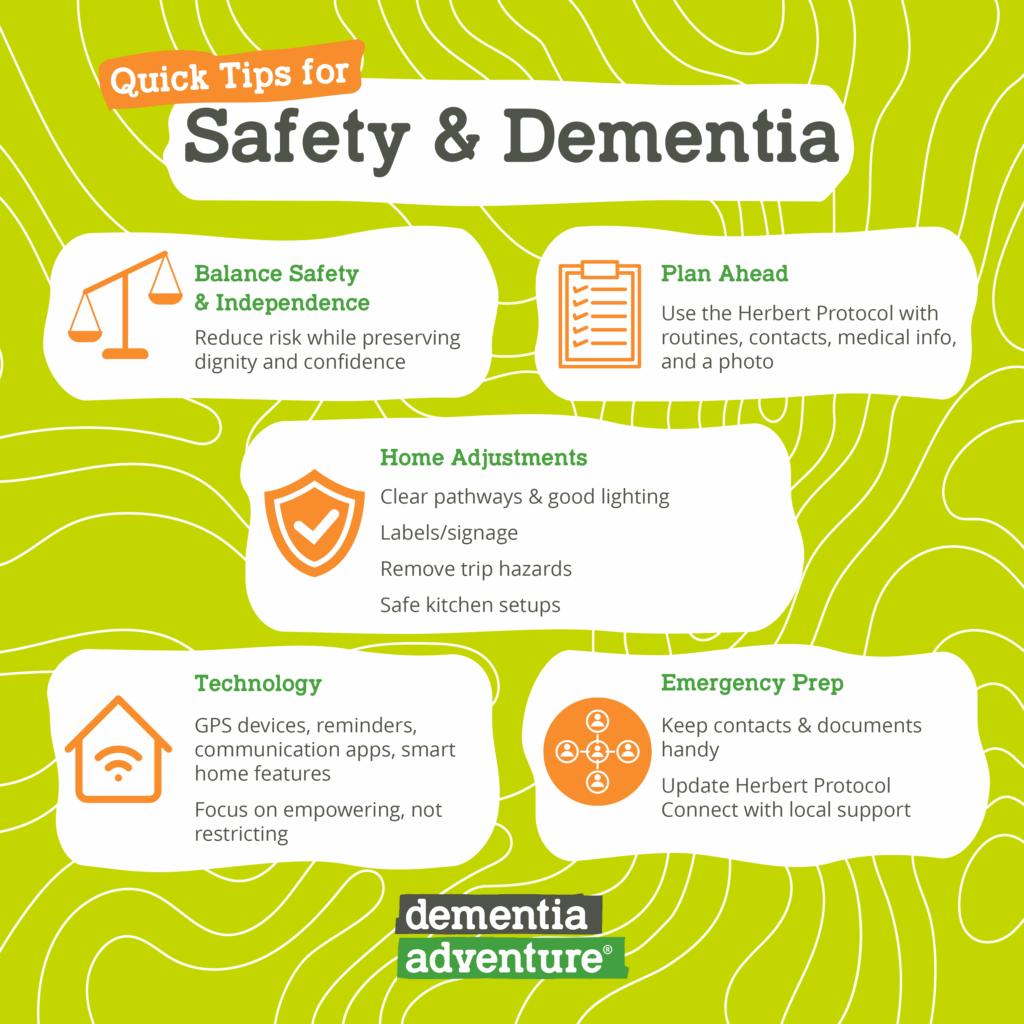


Safety for people living with dementia is about more than just reducing risk — it’s about supporting independence, preserving dignity, and helping individuals feel confident in their daily lives. At Dementia Adventure, we often work with families to find practical ways to balance safety with autonomy.
Here’s an overview of key areas to consider.
Why Safety and Independence Matter
Supporting someone with dementia often raises early concerns about safety at home, during outings, and in daily routines. While managing risk is important, it’s equally vital to ensure people living with dementia maintain confidence, choice, and dignity in everyday life.
The Herbert Protocol: Planning for Peace of Mind
The Herbert Protocol is a simple but powerful tool designed to help the police and emergency services if a person living with dementia goes missing. It includes essential information such as:
- Daily routines and places the person may visit
- Important contacts
- Medical details
- A recent photograph
Having this information ready provides reassurance and peace of mind without feeling restrictive. It ensures emergency services can act quickly and effectively, giving families confidence that a plan is in place.
Practical Home Safety Modifications
Small, thoughtful changes at home can make a big difference to safety and confidence. Some ideas include:
- Keeping pathways clear and ensuring good lighting
- Using labels or signage for rooms and objects
- Making simple kitchen adaptations
- Removing trip hazards
- Installing door sensors or alert mats, where appropriate
The key is low-cost, practical adjustments that support independence without being intrusive or infantilising.
Technology & Tools That Support Well-Being
Technology can empower people living with dementia when used thoughtfully. Examples include:
- GPS-enabled devices to support safe travel
- Medication reminders
- Simple communication apps
- Smart home features such as lights, timers, and alerts
The goal is to use technology in ways that enhance autonomy, not create unnecessary restrictions. Finding the right tools can make daily life easier, safer, and more enjoyable.
Emergency Planning & Staying Prepared
Being prepared for unexpected situations helps reduce stress and maintain confidence. Useful steps include:
- Keeping contact lists and copies of important documents
- Ensuring the Herbert Protocol is up to date
- Having local non-emergency contacts available
- Connecting with neighbours or community support
Good planning provides reassurance for everyone involved while preserving independence and dignity.
Key Takeaways
Safety doesn’t have to come at the cost of autonomy. Through simple home modifications, thoughtful use of technology, proactive planning, and tools like the Herbert Protocol, people living with dementia can maintain confidence, independence, and quality of life.
At Dementia Adventure, we’re here to support families with practical guidance and compassionate advice — because safety should empower, not limit, the lives of people living with dementia.
You can learn more about Balancing Safety and Independence in this Unpacking Dementia session: