


Nature-Based Interventions for People Living with Dementia and Their Carers
As understanding of dementia continues to grow, so too does awareness of the importance of wellbeing, connection and quality of life. Increasingly, evidence is showing that spending time outdoors and engaging with nature can have a powerful impact for people living with dementia and their carers.
At Dementia Adventure, we believe that nature-based experiences should be accessible to everyone. Through supported holidays, Green Letter Days and outdoor activities, we aim to help people living with dementia stay active, connected and engaged with the world around them.
Why Nature Matters
Nature can support people living with dementia and their carers in many ways. Research suggests spending time outdoors may help to:
- Reduce symptoms of stress, agitation and depression
- Improve mood, cognition and social connection
- Support healthier circadian rhythms and sleep patterns
For many people, being outdoors provides a sense of freedom, calm and familiarity. Natural environments can stimulate the senses, encourage movement, and create opportunities for meaningful interaction without pressure or expectation.
While research into nature-based interventions for people living with dementia is still developing, the evidence so far is incredibly encouraging.
What the Research Shows
A scoping review of 77 studies published between 2000 and 2025 explored how nature impacts people living with dementia and their carers.
The findings highlighted several promising approaches.
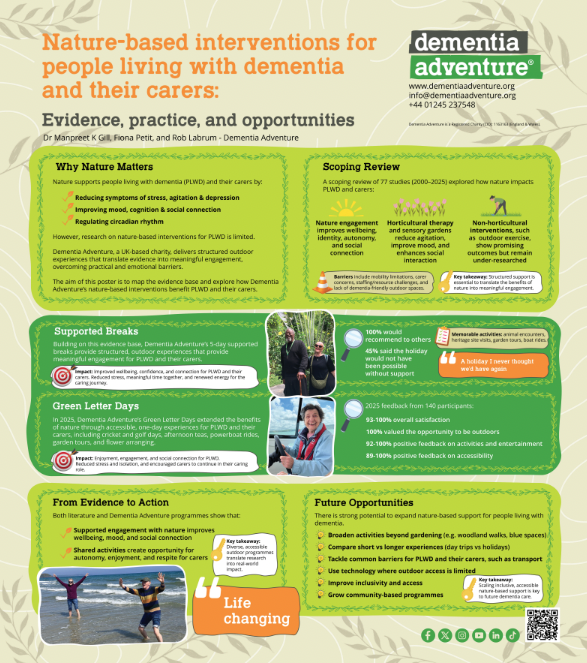
Nature Engagement
Activities involving time outdoors and interaction with natural spaces were shown to improve wellbeing, identity, autonomy and social connection.
Horticultural Therapy and Sensory Gardens
Gardening and sensory-based outdoor activities were linked to reduced agitation, improved mood and enhanced social interaction.
Non-Horticultural Outdoor Activities
Activities such as walking, outdoor exercise and time in blue or green spaces also showed positive outcomes, although further research is still needed.
The review also highlighted barriers that can prevent people accessing nature-based support, including transport challenges, caregiver burden and limited dementia-friendly outdoor spaces.
Supported Breaks and Wellbeing: What Dementia Adventure Research Reveals
Alongside wider research into nature-based interventions, Dementia Adventure has also explored the specific impact of supported breaks on wellbeing for people living with dementia and unpaid carers.
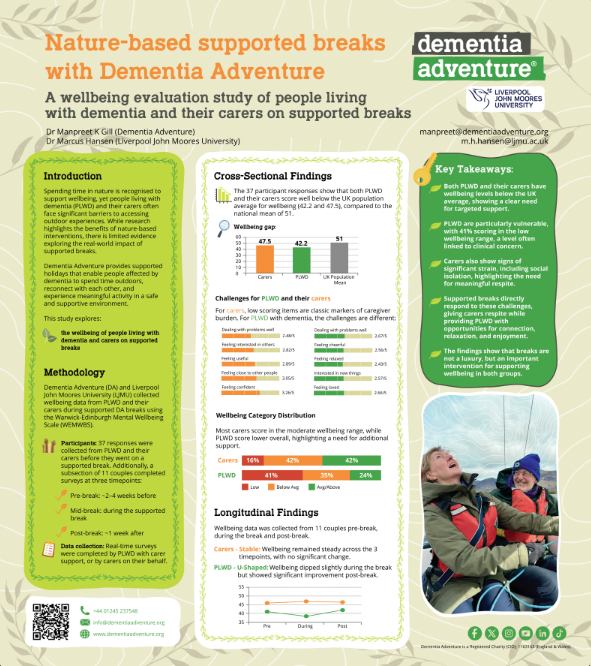
A recent wellbeing evaluation study carried out in partnership with Liverpool John Moores University examined whether supported, nature-based breaks could improve emotional wellbeing, social connection and quality of life.
The findings showed clear positive benefits for both carers and people living with dementia.
About the Study
The evaluation was carried out by Dr Manpreet K Gill from Dementia Adventure and Dr Marcus Hansen from Liverpool John Moores University.
Researchers collected wellbeing data from:
- 37 people living with dementia
- 57 unpaid carers
Participants took part in supported breaks organised by Dementia Adventure.
When Data Was Collected
Wellbeing surveys were completed at three stages:
- Pre-break: 2–4 weeks before the supported break
- Mid-break: during the supported break
- Post-break: 1 week after returning home
The Short Warwick-Edinburgh Mental Wellbeing Scale (SWEMWBS) was used to measure wellbeing.
Key Findings
Carers Reported Lower Wellbeing Before the Break
One of the clearest findings was that carers entered the programme with lower wellbeing than the general UK population.
- Average wellbeing score for carers: 47.5
- Average wellbeing score for people living with dementia: 42.2
- UK population average: 51
The findings reinforce the emotional and practical pressures carers often face.
The Biggest Challenges for Carers
The research identified several recurring challenges affecting carers’ wellbeing, including:
- Emotional burden
- Exhaustion and stress
- Difficulty accessing breaks and respite
- Reduced social connection
- Balancing caregiving responsibilities with personal wellbeing
These findings underline the importance of accessible respite opportunities that genuinely support carers as well as the person they care for.
Nature-Based Breaks Improved Wellbeing
The supported breaks had a measurable positive effect.
Carers
Carers showed steady increases in wellbeing throughout the break experience, with improvements maintained after returning home.
People Living with Dementia
Participants living with dementia also experienced improvements during the break period, with slight gains continuing post-break.
The research suggests that even short supported breaks in nature can help people feel more relaxed, socially connected and emotionally supported.
Turning Evidence Into Action
At Dementia Adventure, these findings reflect what we see every day through our programmes and activities.
Supported Breaks
Our supported holidays provide people living with dementia and their carers with opportunities to enjoy meaningful outdoor experiences together in a safe and supportive environment.
Participants reported:
- Improved wellbeing, confidence and connection
- Renewed energy for both carers and people living with dementia
- Valuable opportunities to relax and spend quality time together
In feedback gathered from participants:
- 100% said they would recommend the experience to others
- 45% shared that the holiday would not have been possible without support
One participant described the experience as:
“A holiday I never thought we’d have again.”
Activities included accessible walks, animal encounters, heritage visits, garden tours and boat trips — all designed to encourage enjoyment, participation and connection.
Green Letter Days
Our Green Letter Days provide one-day dementia-inclusive outdoor experiences, helping people reconnect with activities they enjoy while spending time outdoors with others.
Activities have included:
- Afternoon teas
- Garden tours
- Golf days
- Powerboat rides
- Flower arranging
- Cricket experiences
Feedback from participants in 2025 showed:
- 93–100% overall satisfaction
- 100% valued the opportunity to be outdoors
- 92–100% positive feedback on activities and entertainment
- 89–100% positive feedback on accessibility
Participants also reported increased engagement, social connection and confidence.
Shared Experiences Matter
One of the strongest messages emerging from both research and lived experience is the value of shared activity.
Spending time outdoors together can:
- Create opportunities for conversation and reminiscence
- Strengthen relationships
- Support independence and enjoyment
- Provide respite and positive shared moments for carers
Importantly, these activities are not about performance or physical ability. They are about participation, inclusion and creating meaningful experiences.
Looking Ahead
There is significant potential to expand nature-based support for people living with dementia and their carers.
Future opportunities include:
- Broadening activities beyond gardening into woodland walks and blue space activities
- Comparing the impact of shorter day experiences with longer supported holidays
- Tackling barriers such as transport and accessibility
- Using technology to improve access where outdoor experiences are limited
- Growing community-based programmes and dementia-inclusive outdoor spaces
A More Inclusive Future Outdoors
Nature-based interventions are not simply “nice to have” — they can play an important role in supporting wellbeing, identity and connection for people living with dementia and their carers.
The Dementia Adventure research demonstrates that supported, nature-based breaks can make a real difference by creating opportunities for connection, rest, outdoor activity and emotional support.
By continuing to develop accessible, inclusive outdoor opportunities, more people can experience the benefits of nature, movement and shared adventure.
Because sometimes, a walk, a conversation, or a day outdoors can make all the difference.