

When we think about staying active, it’s easy to picture structured exercise or competitive sport. But for people living with dementia, movement can take many forms—and its impact goes far beyond physical health.
From a gentle walk outdoors to watching a favourite team play, sport and movement can open up opportunities for connection, confidence and joy. Importantly, they can also help people reconnect with their identity through memory and shared experience.
The power of movement—no matter how small
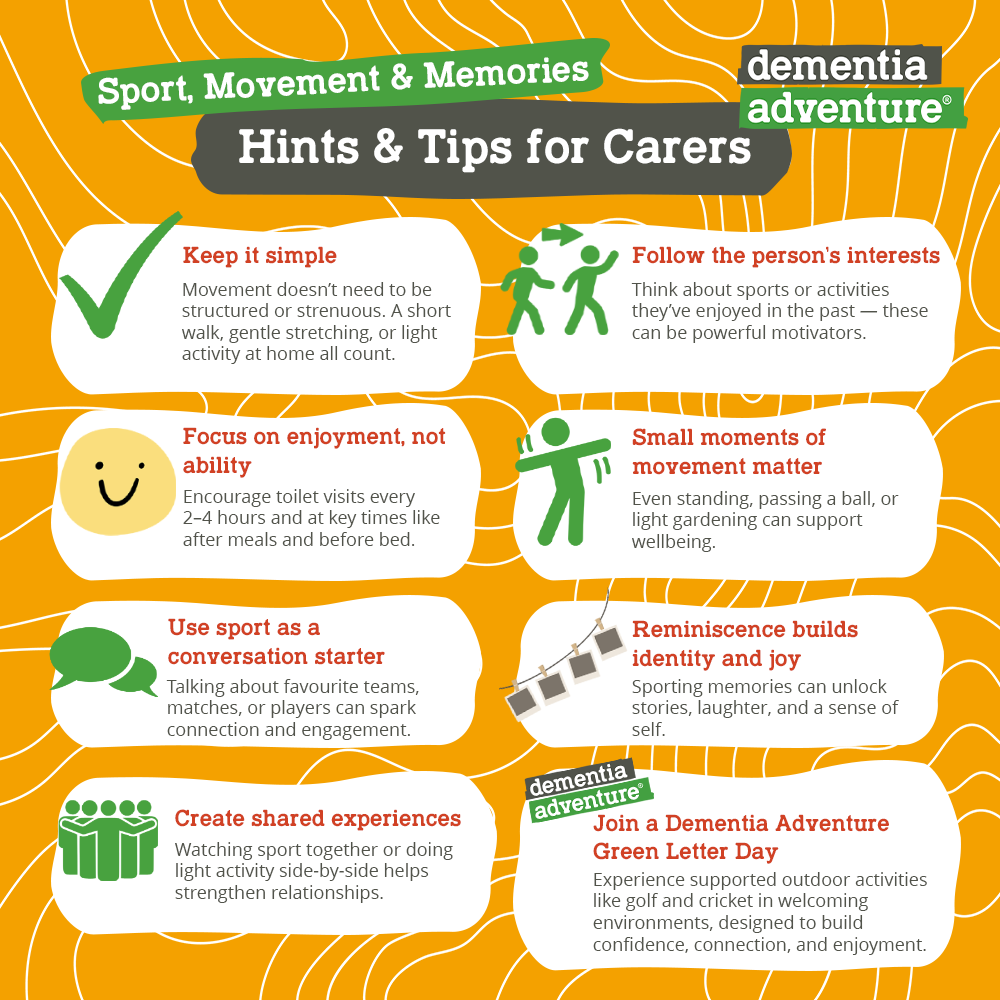
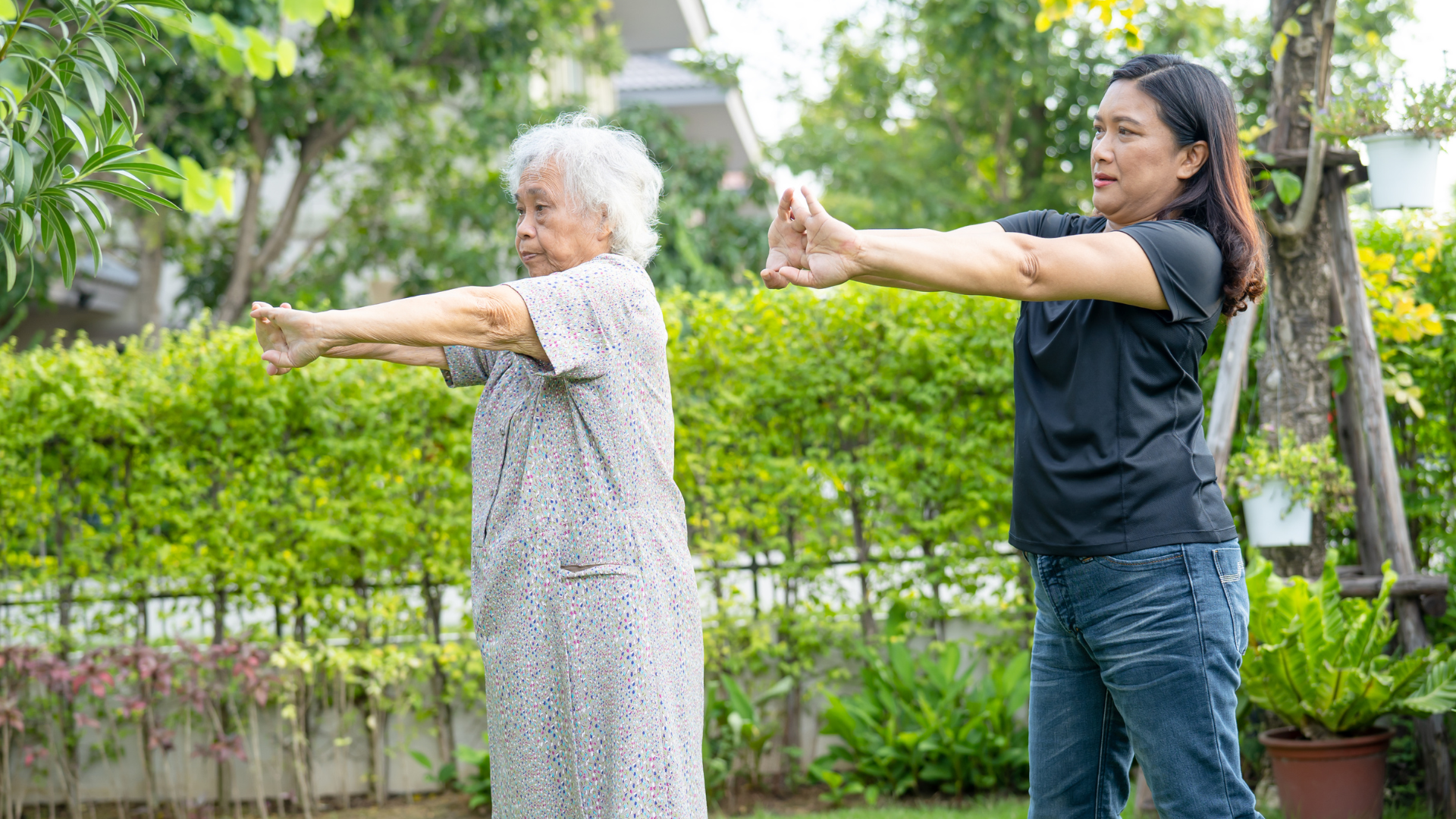
Physical activity doesn’t need to be strenuous to make a difference. Simple, accessible movement—like stretching, walking, or even passing a ball—can support overall wellbeing.
For people living with dementia, gentle movement can:
Help improve mood and reduce anxiety
Support better sleep
Maintain mobility and independence
Provide a sense of routine and purpose
The key is to focus on what feels comfortable and enjoyable, rather than what feels like “exercise”.
More than physical: the social side of sport
Sport has a unique ability to bring people together. Whether it’s taking part in an activity or watching from the sidelines, it creates shared moments that can strengthen relationships.
For carers and companions, these shared experiences can:
Open up conversation
Reduce feelings of isolation
Create positive, meaningful time together
Even simple activities—like watching a match on television or chatting about a favourite team—can foster connection.
Unlocking memories through sport
One of the most powerful aspects of sport is its link to memory. For many people, sporting experiences are deeply embedded—whether that’s playing in a local team, following a club for years, or remembering iconic matches.
These memories can remain accessible even as other memories fade.
This is where reminiscence plays an important role. Talking about past sporting experiences, revisiting familiar routines, or engaging in related activities can help:
Spark conversation
Reinforce a sense of identity
Create moments of recognition and joy
A familiar sound, place or object—like the thud of a cricket ball or the sight of a green pitch—can be enough to trigger meaningful responses.
Creating opportunities for connection
You don’t need specialist equipment or expertise to bring movement and reminiscence into everyday life. Small, thoughtful approaches can make a big difference:
- Take a walk somewhere familiar or meaningful
- Watch sport together and talk about past experiences
- Encourage light activity linked to previous hobbies
- Use photos, commentary, or memorabilia to prompt conversation
- Focus on enjoyment rather than outcomes
The most important thing is to follow the person’s interests and preferences.
The value of shared experiences outdoors
Being outdoors adds another dimension. Fresh air, natural surroundings, and a change of environment can all contribute to improved wellbeing.
Experiences that combine nature, movement and familiar activities—such as walking, golf or cricket—can be especially powerful. They offer space not just for activity, but for connection, reflection and enjoyment.
A different way of thinking about activity
Ultimately, supporting someone living with dementia to stay active isn’t about structured programmes or physical targets. It’s about creating opportunities for engagement, connection and meaning.
By embracing movement in all its forms—and recognising the emotional power of memory and shared experience—we can help people continue to enjoy the activities that matter to them.
Because sometimes, it’s not about how far you move, but how those moments make you feel.
Watch this Unpacking Dementia session for further insight: