

Music has a remarkable ability to be part of the moments that matter to us.
A song can remind us of a particular time or place. It can make us smile, encourage us to move, or simply create a moment of calm. But music can also be about much more than remembering the past. It can help us connect with one another, express ourselves and enjoy the present.
For people living with dementia, music can offer a way to connect with identity, emotions, memories and the people around them. And it doesn’t have to be complicated or carefully planned. Sometimes, the simplest moments can be the most meaningful.
Music is personal
When we talk about music and dementia, it is easy to focus on the idea of a familiar song bringing back a memory.
And sometimes it does.
But everyone’s relationship with music is different. A particular song might be deeply meaningful to one person and mean very little to someone else. Music can also be important even when it doesn’t bring back a specific memory.
Sometimes, it’s simply about how it makes us feel in that moment.
There is no such thing as a perfect playlist for everyone living with dementia. The most important thing is to start with the person – their tastes, interests and responses – rather than making assumptions about what they might enjoy.
It’s not only about looking back
Music can connect us with the past, but it can also help us enjoy the present.
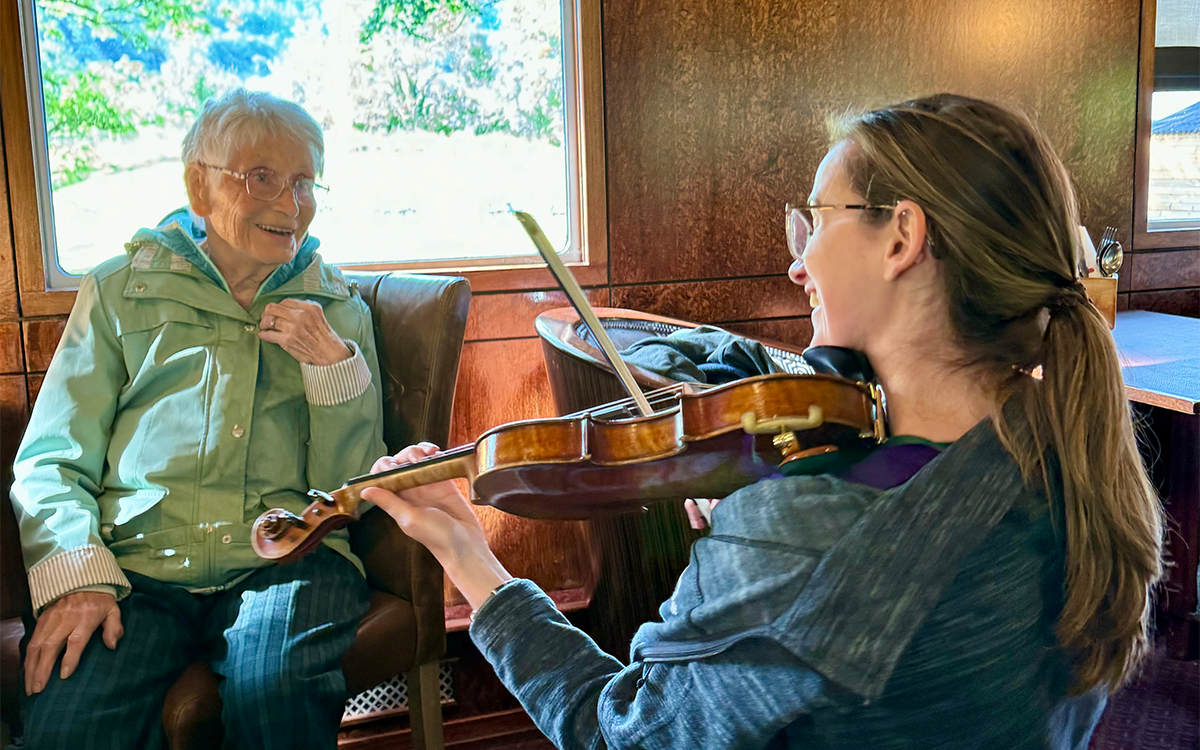
Sharing a song, singing together, tapping along to a rhythm or having a dance in the kitchen can all create moments of connection.
Music can bring people together across generations, too. Family members, friends, carers and people living with dementia can all share in the experience.
And importantly, music can help us create new memories together, rather than only revisiting old ones.
Finding music in the world around us
At Dementia Adventure, our research shows that getting outside and connecting with nature can have real benefits for people living with dementia and their carers. Being outdoors can provide opportunities for movement, sensory stimulation, relaxation and connection – and sometimes, simply a change of environment can make a difference.
When we think about music, it doesn’t always have to come from a radio, phone or playlist either.
There is music all around us in the natural world: birdsong, the rustling of leaves, rain falling, running water, waves and the changing rhythms of the seasons.
These sounds can encourage us to pause and notice what is around us. They can become part of an outdoor experience, alongside the sights, smells and sensations of being in nature.
You might sit together in the garden and listen to the birds, take a walk and notice the sounds around you, or find a peaceful spot outdoors and listen to some favourite music together.
It doesn’t need to be complicated, and there doesn’t need to be a particular outcome. You don’t have to try to trigger a memory or turn it into an activity. It can simply be about being outside, listening, noticing and enjoying the moment together.
Adventure doesn’t always have to mean going somewhere far away or doing something challenging. Sometimes it can be as simple as stepping outside, discovering something new or experiencing something familiar in a different way.
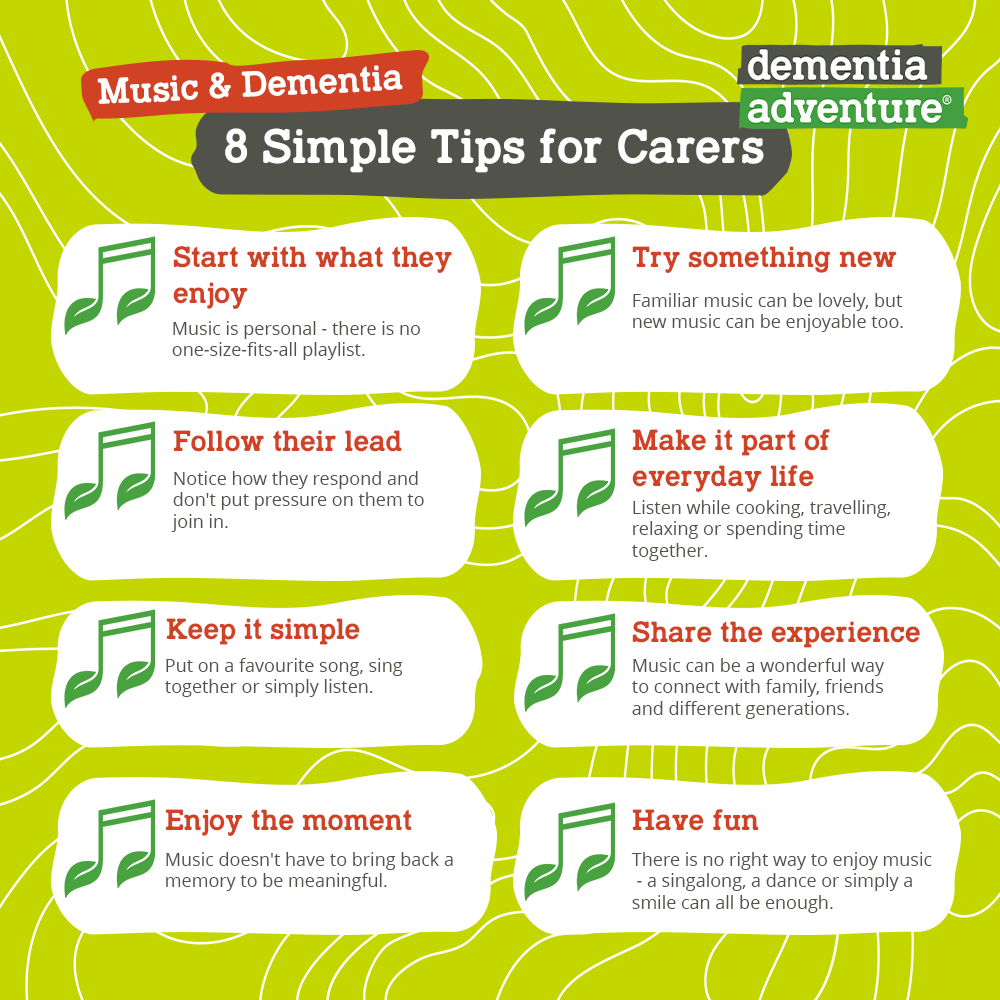
Keep it simple
For carers, the idea of finding another activity to organise can sometimes feel overwhelming. But bringing more music into everyday life doesn’t have to mean joining a choir or creating the perfect playlist.
It might simply mean:
- putting on some music while cooking together;
- listening to a favourite song;
- singing along in the car;
- looking through old records or CDs;
- going to a local music event;
- trying something new; or
- simply sitting and listening together.
There is no pressure to make something happen.
A person might want to sing, dance, talk about the music – or simply listen. All of those responses are okay.
Be curious, not prescriptive
One of the most useful approaches is simply to be curious.
What does the person enjoy now? What makes them smile? What music do they choose for themselves?
It can be tempting to assume that someone will enjoy a particular type of music because of their age or the era they grew up in. But our musical tastes are as individual as we are.
And there is no reason to only listen to music from the past. New music can be exciting and enjoyable too.
The key is to notice what feels good and follow the person’s lead.
Make room for enjoyment
Music doesn’t need to have a particular purpose.
You don’t need to use it to trigger a memory. You don’t need to make it an activity. And you don’t need to get it right.
Sometimes, music can simply be about enjoyment.
A favourite song. A shared laugh. A little dance. A moment of calm.
These small moments can become meaningful simply because they are shared.
Watch our conversation about Music & Memory
Want to explore the ideas behind music, memory and connection further?
Watch our Dementia Adventure Facebook Live, Unpacking Music & Memory, where we explore how music can support connection, enjoyment and wellbeing, and share practical ideas for bringing more music into everyday life.