



When you’re caring for someone living with dementia, much of your attention naturally goes towards the present. There are routines to maintain, appointments to organise and changing needs to navigate. Thinking about the future can feel difficult, particularly when you don’t know what lies ahead.
But planning for the future doesn’t have to begin with difficult decisions. It can start with something much simpler: understanding what matters most to the person you care for.
Perhaps it’s a morning walk in a favourite park, time spent tending to the garden, listening to birdsong from a familiar chair or enjoying a cup of tea with someone they love. These everyday moments can tell us a great deal about what makes life meaningful.
Advance care planning is about understanding these things, helping someone’s wishes be heard and thinking about how to protect what matters as their needs change.
You don’t have to work everything out at once. Small conversations, taken at the right pace, can be a valuable first step.
What is advance care planning?
Advance care planning is a process of thinking about, discussing and, where appropriate, recording a person’s wishes and preferences for their future care.
It can cover a wide range of things, from everyday comforts to more complex decisions about health and treatment. For example, it might include:
- The people, places and activities that are important to them.
- Their daily routines, interests and ways of communicating.
- What helps them feel safe, comfortable and connected.
- Their preferences for future health and social care.
- Their wishes about treatment and care towards the end of life.
For someone who loves being outdoors, this might mean recording how important gardening is to them, their favourite places to visit or how spending time in nature contributes to their wellbeing. For someone else, it might be music, cooking, seeing family or enjoying a familiar activity at home.
There is no single right way to plan ahead. What matters is understanding the individual and making sure their preferences are not lost among the practicalities of care.
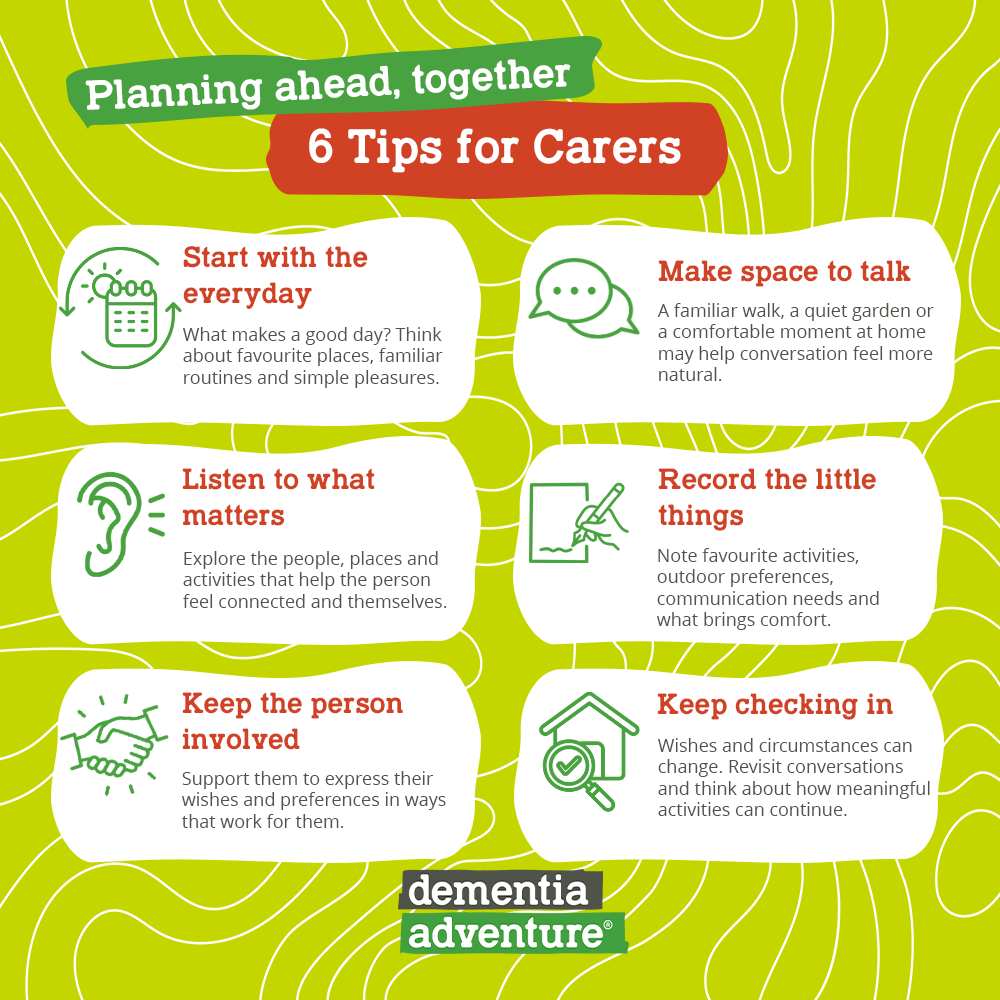
Advance care planning is also an ongoing process. Wishes and circumstances can change, so conversations and plans can be revisited over time.
Why is planning ahead important when someone has dementia?
Dementia affects everyone differently. As the condition progresses, a person’s memory, communication or ability to make certain decisions may change. Having conversations earlier can create more opportunities for them to express their wishes and take part in decisions about their own life.
Planning ahead can also help carers and family members feel better prepared. If a change in health or care needs occurs, having a clearer understanding of what matters to the person can provide helpful guidance at a stressful time.
Just as importantly, it can help ensure that future care reflects the person’s identity, values and interests – not just their diagnosis.
Imagine knowing that someone feels most like themselves when they are outside, that gardening has been a lifelong passion or that a familiar walk is an important part of their routine. Sharing this information with those involved in their care can help them understand the person beyond their immediate care needs.
Of course, future circumstances cannot always be predicted, and not every preference will be possible to maintain in every situation. But understanding what matters gives everyone a better starting point for making thoughtful, person-centred decisions.
A diagnosis of dementia does not automatically mean someone cannot make decisions. People should be supported to participate in decisions as fully as possible, with their individual abilities and circumstances taken into account.
How can you start a conversation?
Talking about future care can feel daunting. You might worry about upsetting the person you care for, introducing a subject they would rather avoid or not knowing what to say.
The good news is that you don’t need to begin with a formal conversation about the future.
Instead, start with the things that matter in everyday life.
You might ask:
- “What makes a really good day for you?”
- “Where do you most enjoy spending time?”
- “What helps you feel relaxed and comfortable?”
- “Is there anything you’d really like us to keep making time for?”
- “What would you want people to know about you if you needed more support?”
If the person enjoys the outdoors, a familiar walk or some time sitting together in the garden might provide a relaxed opportunity to chat. If being outside isn’t comfortable or accessible for them, a favourite activity or a quiet moment at home may work better.
The aim isn’t to turn every enjoyable moment into a serious discussion. It’s to create opportunities to listen, understand and learn what matters to the person.
A few things can help:
Choose a comfortable moment. Find a time when neither of you feels rushed or distracted.
Take one topic at a time. You don’t need to cover every aspect of future care in one conversation.
Give the person time. Listen without rushing their response, and consider whether pictures, written choices or other communication methods might help.
Respect their readiness. If they don’t want to talk, acknowledge that and consider revisiting the subject another time, where appropriate.
Keep the conversation open. People’s preferences may become clearer gradually, and their wishes can change.
You don’t need to have all the answers. Sometimes, listening carefully is the most useful thing you can do.
Keep the person at the centre
As a carer, you may know the person better than almost anyone else. You might recognise when they’re happy, what makes them anxious and which familiar activities help them feel settled.
This knowledge is incredibly valuable when thinking about future care.
However, it’s important to distinguish between what you would choose and what the person themselves wants. Where possible, involve them directly and help them express their preferences in ways that work for them.
Think about the details that make someone who they are. Perhaps they have always enjoyed being surrounded by plants, love watching wildlife or find comfort in familiar places. Maybe they prefer a quiet environment, need time to adjust to new surroundings or feel reassured by particular routines.
These details might seem small, but they can make a meaningful difference to how someone experiences their day and receives support.
If family members disagree about future care, returning to the person’s known wishes, values and priorities may help guide the conversation. A healthcare professional or social care worker may also be able to support difficult discussions.
The focus should remain on the person’s rights, preferences and wellbeing, rather than on assumptions about what someone living with dementia can or cannot do.
Record the things that matter
Conversations are a valuable starting point, but writing down important information can help others understand the person if their needs change or they receive support from people who don’t know them well.
You could keep a simple record of:
- Favourite activities, places and outdoor experiences.
- Daily routines and the things that bring comfort or enjoyment.
- Important relationships, interests and personal history.
- Communication preferences and how the person expresses their needs.
- Things that may cause distress and what helps them feel reassured.
- Their wishes and preferences for future care, where these have been discussed.
- Relevant contacts and where further information can be found.
Share relevant information with appropriate family members and professionals, involving the person and respecting their privacy wherever possible. Keep the record somewhere accessible and review it as circumstances change.
A record of personal preferences can help communicate what matters to someone, but it is not a substitute for formal legal arrangements where these are needed.
Depending on the person’s circumstances and where they live in the UK, planning ahead may also involve considering a lasting power of attorney, an advance decision to refuse treatment or other arrangements. These have different purposes and legal requirements, so seek appropriate advice before making decisions about them.
What if communication becomes more difficult?
Dementia can affect how someone communicates, but this doesn’t mean their wishes and preferences stop mattering.
Allow plenty of time for responses, use clear language and consider offering one choice at a time. Photographs, familiar objects, gestures or visual prompts may help someone show what they enjoy or how they feel.
You can also draw on what you know about the person’s life. Do they light up when they see a familiar garden? Do they enjoy listening to birds, feeling the breeze or looking at flowers? Are there particular activities that help them feel calm and connected?
Observations like these can help you understand their preferences, alongside their own words and responses. If communication becomes more challenging, ask a professional who understands their needs for guidance.
If the person can no longer communicate a particular wish clearly, their previously expressed wishes, values and preferences may help inform decisions. Any decisions must still respect their rights and follow the relevant legal framework.
Planning ahead can help protect quality of life
When people think about advance care planning, they may immediately think about illness, treatment or end-of-life care. These can be important parts of planning, but they are not the whole picture.
Planning ahead can also be an opportunity to think about what a good life looks like for the person you care for – and how to support the things that bring them meaning, enjoyment and connection.
For some people, that might mean finding ways to continue gardening, visiting a favourite outdoor space or spending time in nature with support. For others, it could mean maintaining friendships, listening to music, pursuing a hobby or preserving familiar routines.
As needs change, some activities may need to be adapted. A longer walk might become a shorter outing, gardening might take place in raised planters or someone might enjoy watching wildlife from a comfortable seat. What is possible will depend on the individual, their preferences and their circumstances.
The point isn’t to make promises about the future. It’s to recognise what matters and consider how it might continue to be part of someone’s life.
You don’t have to do everything today
Caring for someone can be demanding, and planning ahead may feel like one more responsibility on an already long list.
Try to take it one step at a time. You could begin by asking what makes a good day, writing down a favourite activity or talking to a healthcare professional about the options available.
Support is available, too. The person’s GP, healthcare team, social care professionals, dementia support services and carers’ organisations may be able to help you explore the next steps.
You don’t have to navigate every question on your own, and it’s okay if some conversations take time.
Remember that advance care planning is not a one-off task. It is an ongoing process of listening, learning and reviewing what matters as a person’s circumstances change.
Protecting what makes life meaningful
At its heart, advance care planning is about helping someone remain at the centre of decisions about their life and care for as long as possible.
For carers, it can be an opportunity to understand the person more deeply, prepare for possible changes and help ensure that their wishes, interests and values are understood by those supporting them.
Sometimes, the best place to begin is with the things you already share: a favourite walk, time in the garden, a familiar routine or a conversation about what makes life enjoyable.
You don’t need all the answers today. Start by listening to what matters, and take the next step together.
One simple question can be a meaningful beginning: “What makes life feel good to you, and what would you like us to help you keep doing?”
Watch the video for further information and practical guidance on planning ahead, starting conversations and helping ensure a person’s wishes are heard. ***(Coming Soon)***
Further information and support
This article provides general information, not individual medical or legal advice. Formal arrangements and terminology vary across the UK. Speak to an appropriate professional for advice about your circumstances.